

Small Closet Organization Ideas: 10 Clever Ways to Maximize Your Space
As an Amazon Associate I earn from qualifying purchases. This post may also contain affiliate links from other trusted retailers. If you click through and make a purchase, I may earn a commission at no additional cost to you. I only recommend products I genuinely believe will add value to your home. Read my full affiliate disclosure here.
If you’ve ever stood in front of a stuffed closet wondering how three shirts can somehow take up all the room, you’re not alone. Small closets are one of the most common frustrations in homes of every kind — older houses and newer builds alike, especially when the builder treated storage as an afterthought. The good news is that with the right approach, even the tightest closet can work far harder than it currently does. These small closet organization ideas focus on practical changes you can make this weekend, not a full renovation.
1. Go Vertical Before You Go Wider
Most people organize a closet left to right and never think about the space below their existing hanging rod. But that gap between the bottom of your hanging clothes and the closet floor is usually wasted — and it’s one of the easiest wins in the whole closet. A closet rod extender hangs from your existing rod and adds a second, lower tier underneath, perfect for shorter items like shirts, folded pants on hangers, or skirts.
A closet rod doubler (clamps onto your existing rod) is a genuinely useful, low-cost addition here.

2. Use Slimline Velvet Hangers
This sounds minor, but it’s one of the highest-impact changes for a small closet. Standard wooden or plastic hangers are surprisingly bulky, and swapping them for slim velvet hangers can reclaim several inches of rod space instantly — often enough to fit noticeably more clothes without adding a single shelf.
A set of non-slip velvet hangers in a single color also makes the closet look more visually uniform, which helps a small space feel less cluttered.

3. Add a Hanging Shelf Organizer
If your closet has just one rod and nothing else, a fabric hanging shelf organizer is one of the fastest ways to add structure without any tools or installation. It hangs straight from the rod and gives you 6-8 cubbies for folded sweaters, bags, or accessories that would otherwise sit in a pile on the floor.
Look for one with reinforced shelf edges — cheaper versions sag once loaded.

4. Use the Back of the Door
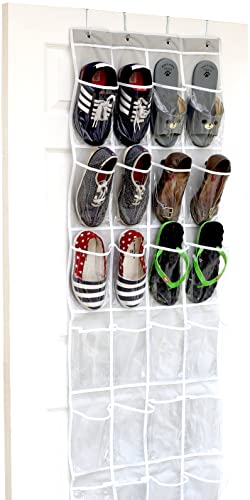
The inside of a closet door is one of the most underused surfaces in the whole house. An over-the-door organizer — whether it’s for shoes, accessories, or cleaning supplies — adds storage without taking up an inch of the closet’s actual footprint.
A clear over-the-door shoe organizer works well for shoes but also doubles nicely for handbags, scarves, or even cleaning products if it’s a utility closet.
5. Install Adjustable Shelving Instead of Fixed
Many small closets, especially older ones, come with a single fixed shelf above the rod. Swapping this for an adjustable shelving system means you can configure the space around what you actually own, rather than what a builder assumed you’d own decades ago.
A modular wire shelving kit is a good middle ground — it’s affordable, adjustable, and doesn’t require major DIY skill to install.

6. Use Clear Storage Bins for Off-Season Items
A small closet fills up fast when it’s trying to store every season’s clothing at once. Clear, stackable bins let you rotate out-of-season items — think winter coats in summer, or summer dresses in winter — while still being able to see what’s inside without opening every box.
Stackable clear plastic bins with lids, ideally a low-profile design that fits neatly on a top shelf.

7. Stack Foldable Bins to Create Instant Shelving
If your closet is short on built-in shelving, you don’t necessarily need to install anything to fix it. Stackable fabric storage bins let you build your own shelving system from the floor up — stack two to four layers to create a column of separated, easy-to-grab storage for folded clothes, accessories, or off-season items, without a single tool or bracket.
This is especially useful in closets with a lot of empty floor space but nowhere to put folded items — instead of a pile on the floor, you get defined, stacked sections.

8. Group by Category, Not Just by Color
This one costs nothing. Grouping clothes by type — all pants together, all dresses together, all workwear together — makes a small closet feel far more organized than color-coding alone, because it’s easier to actually find what you’re looking for. Color-coding within each category afterwards is a nice finishing touch, but category first makes the biggest practical difference.

9. Use Stackable Shoe Storage Instead of a Shoe Pile
Shoes are one of the biggest space-wasters in a small closet, especially when they’re just piled on the floor. A stackable shoe rack or slim shoe shelving unit turns that floor space into structured vertical storage, and it makes a real visual difference too — a shoe pile is often the single messiest-looking part of a small closet.
An expandable stackable shoe rack is a good option since it adjusts to fit closets of different widths.

10. Add Hooks for the Things That Don’t Fold or Hang Well
Every closet has a few items that don’t really belong on a hanger or a shelf — bags, scarves, belts, robes. A small set of adhesive or over-the-rod hooks solves this instantly, and it stops these items from ending up in a heap at the bottom of the closet.
Adhesive hooks are ideal for renters since they come off cleanly without damaging paint.

None of these small closet organization ideas require a full closet renovation — most can be done in an afternoon, and several cost very little. The key is layering a few of these together: going vertical, adding a bit of structure with bins or shelving, and being deliberate about how things are grouped. Start with one or two changes from this list and you’ll likely find your small closet works far harder for you than it did before.


