

Sage Green Kitchen Essentials: How to Bring the Trend Into Your Space
As an Amazon Associate I earn from qualifying purchases. This post may also contain affiliate links from other trusted retailers. If you click through and make a purchase, I may earn a commission at no additional cost to you. I only recommend products I genuinely believe will add value to your home. Read my full affiliate disclosure here.
If you’ve been scrolling kitchen inspiration lately, you’ve probably noticed sage green everywhere — on cabinets, small appliances, and the kind of countertop styling that makes a kitchen feel finished rather than just functional. Sage green kitchen essentials are having a real moment right now, and it’s easy to see why: the color is soft enough to feel calming, but it has just enough depth to keep a space from looking flat or sterile.
The good news is you don’t need a renovation to get the look. A handful of the right pieces — a statement appliance, some everyday tools, a little tableware — can shift the whole feel of a kitchen. Here’s how to do it well, plus some specific pieces worth considering.
If you want a piece that’s as practical as it is pretty, this Desert Sage green slow cooker is a great place to start — its earthy, modern-vintage color sets the tone for the whole space, and unlike a lot of “kitchen decor,” it’s something you’ll actually use every week.

Why Sage Green Works So Well in Kitchens
Sage isn’t just “another green.” It sits in that in-between zone — muted, slightly gray, closer to nature than to anything neon or citrus-bright — which is exactly why it works in a room people spend so much time in.
A few reasons it holds up better than a lot of trend colors:
- It pairs easily with both warm woods (oak, acacia, walnut) and cooler metals (brushed nickel, chrome), so you’re not locked into one hardware finish
- It reads as calming rather than cold, which matters in a room associated with mornings and meal prep
- It has enough gray undertone to age gracefully — it won’t feel dated the way a very saturated color might in five years
- It photographs beautifully against white or cream cabinetry, which is why it shows up so often in kitchen styling content
One thing worth knowing before you start shopping: “sage green” isn’t one single shade across brands. You’ll see it labeled sage, pistachio, seaglass, and mint, and they’re all genuinely a little different. That’s not a problem — it’s actually part of how to do this well, and we’ll come back to it later in the post.
Start With One Statement Piece
If you only add one sage green item to your kitchen, make it something with presence. A stand mixer is the classic choice for a reason: it sits out on the counter permanently for most people, so it’s doing decor work every single day, not just when you bake.
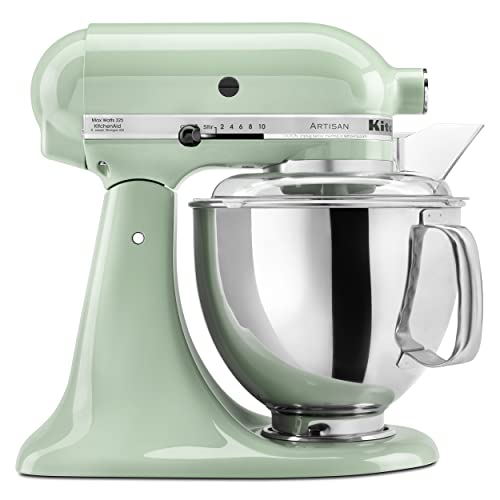
The pistachio shade leans slightly softer and more muted than a true kelly green, which puts it right in sage territory and makes it easy to build the rest of your palette around. If you’re going to spend on one item for this look, this is the one that earns its keep — it’s both a workhorse and the visual anchor of the whole counter.
Cookware That Doubles as Decor
Cookware you actually use tends to get left out of the color conversation, but a Dutch oven is arguably the second-biggest visual commitment in a kitchen after a stand mixer, simply because of its size.

A few practical things to know about enameled cast iron before buying one in any color:
- It’s heavy — a 7.5-quart pot filled with food can be a genuine workout to lift, so factor that in if you have any wrist or grip concerns
- Enamel coatings are more prone to chipping than bare cast iron if dropped or knocked against a hard edge, so a little extra care in storage goes a long way
- Pre-seasoned or enameled options don’t need the same maintenance (oiling, re-seasoning) that raw cast iron requires, which makes them a lower-effort choice for everyday cooking
A Coffee Corner Worth Showing Off
If there’s one zone of a kitchen that tends to become its own little vignette, it’s the coffee station. It’s also one of the easiest places to lean into a color scheme, since the pieces are usually grouped together anyway.
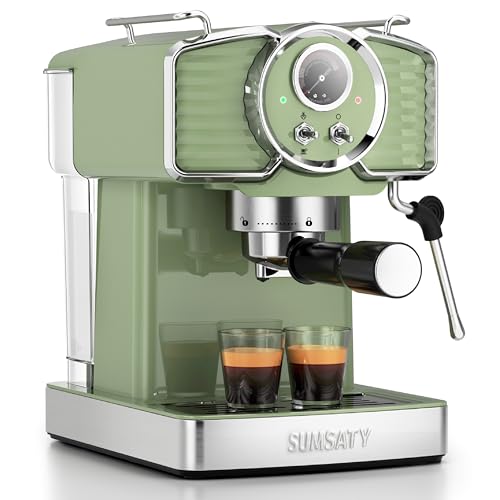
A retro-style espresso machine like this is a nice centerpiece for a coffee corner, but it’s worth being realistic about what a home machine does well: pulling a solid shot and frothing milk for lattes and cappuccinos. If you’re coming from a pod machine, there’s a learning curve — tamping pressure and grind size both affect the shot more than people expect at first.

For tea drinkers (or anyone who wants hot water without pulling out the espresso machine), a stovetop kettle rounds this zone out. A few things worth checking before buying any kettle: confirm it’s rated for your stovetop type, since induction requires a magnetic base, and go for a whistling model over a silent one if you’re prone to getting distracted and walking away from the stove.
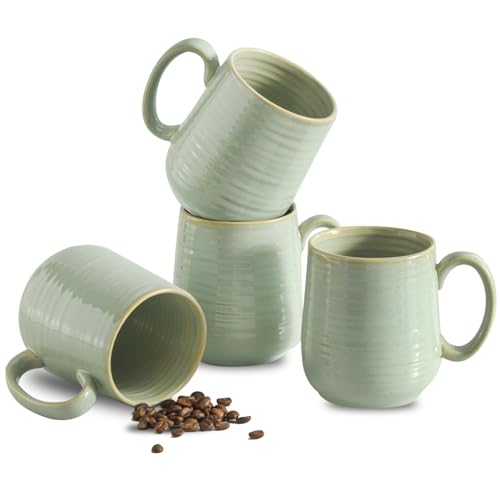
Mugs are the easiest, lowest-risk way to bring color into this corner. Open shelving or a mug rail shows them off; a closed cabinet doesn’t, so it’s worth thinking about where they’ll actually live before buying purely for looks.
Small Appliances Don’t Have to Be an Afterthought
Once you have a couple of anchor pieces, it’s tempting to leave everything else stainless steel or black. But small appliances take up a surprising amount of visual real estate on a counter, and a mismatched lineup can undercut an otherwise well-styled kitchen.
A toaster is a good, low-commitment addition:
- Look for a slim or compact silhouette if counter space is tight — it keeps the piece from feeling bulky next to a larger appliance
- A muted “seaglass” or sage tone tends to read more sophisticated than a bright mint, which can skew more playful than intentional
- Wide slots are worth prioritizing if you regularly toast bagels or thicker bread, since narrow slots are a common complaint

Pantry Storage That Stays on the Counter
Not everything sage green needs to be an appliance. Storage pieces — the things that actually stay out on the counter day to day — are some of the highest-impact, lowest-cost ways to pull the color through a kitchen.

A bread box is a genuinely practical addition if you buy bakery loaves or bake your own — it keeps bread fresher for longer than an open countertop and out of direct sunlight, which speeds up staling. A built-in slicer and bamboo lid (that doubles as a cutting board) is a nice bonus if counter space is limited and you’d rather one object do two jobs.

Canisters are worth choosing based on seal quality as much as looks. An airtight lid genuinely extends the shelf life of flour, sugar, and other pantry staples compared to leaving bags clipped shut, and chalkboard-style labels mean you’re not stuck with whatever the manufacturer printed if your storage needs change.
Cutlery Storage That Doubles as Decor
Knife blocks are one of those items people default to buying in black or stainless without a second thought, but they’re sitting on the counter all day — they might as well contribute to the look you’re going for.

A sage green block with a natural acacia wood base is a nice example of the wood-plus-sage pairing mentioned earlier — it grounds the color instead of letting it feel like the only thing happening in the space. If you’re shopping for a knife set generally (not just for looks), it’s worth checking that the set includes the basics you’ll actually use — a chef’s knife, a paring knife, and a bread knife — rather than paying for a large block mostly filled with steak knives you rarely reach for.
Dinnerware for Everyday Meals and Entertaining
Dinnerware is where a lot of people either go too matchy or avoid color altogether. A full set in a muted green is a nice middle ground — it’s noticeably not white, but it won’t fight with whatever food is actually on the plate.

Reactive glaze finishes are worth a quick mention if you haven’t shopped for dinnerware in a while: the glaze reacts slightly differently on each piece during firing, so no two plates are perfectly identical. That’s a feature, not a defect — it’s what gives handmade-style stoneware its texture and depth compared to a flat, uniform finish. If that variation bothers you, look for a straight matte or gloss glaze instead, which will be more consistent piece to piece.
How to Mix Different Shades of Green Without It Looking Off
Here’s the thing worth being upfront about: if you buy pieces from different brands, you will end up with slightly different greens — pistachio here, true sage there, a mint-leaning seaglass somewhere else. That’s completely normal, and it’s actually more forgiving than people expect, as long as you treat it as a family of tones rather than aiming for an exact match.
A few ways to make varied shades work together rather than clash:
- Group by undertone, not exact shade — cooler, grayer greens (sage, seaglass) sit together more comfortably than a cool sage next to a warm, yellow-leaning green
- Let one piece be the “true” sage and treat everything else as supporting — usually your biggest or most-used item (the mixer, the Dutch oven) works well as that anchor
- Anchor with neutral: white or cream cabinetry, butcher block counters, or plain white walls give all the different greens room to coexist instead of competing with each other
- Let wood do some of the work: cutting boards, a wood-handled kettle, or an acacia knife block break up the various greens and keep the palette from feeling like a color-matching exercise
- Leave some surfaces empty: a fully styled counter, top to bottom, tends to look busier than a few well-chosen pieces with breathing room around them
If having every single item match precisely really matters to you, your best bet is buying multiple pieces from the same manufacturer’s line, since brands are usually consistent within their own product range even if they vary from each other.
Frequently Asked Questions
Does sage green go with stainless steel appliances? Yes — sage green pairs well with stainless steel, since the cool undertone of both keeps the palette from feeling too warm or too cold. It’s actually one of the more flexible accent colors for a kitchen that already has stainless major appliances.
Is sage green kitchen decor a passing trend? It’s held on longer than a lot of kitchen color trends, largely because it’s muted rather than saturated. Muted, nature-adjacent tones tend to age better than bright or neon shades, which is part of why sage has stayed popular rather than peaking and fading quickly.
Do all my sage green kitchen items need to be the exact same shade? No, and trying to match them exactly usually backfires. Sage, pistachio, and seaglass are close enough to read as a coordinated palette rather than a mismatch, especially once wood tones and neutral surfaces are mixed in.
What wall color goes best with sage green kitchen items? Warm white, soft cream, and light greige walls tend to let sage green accessories stand out without clashing. A stark, cool white can sometimes make sage read slightly more gray than intended, so a warmer white is usually the safer choice.
Bringing It All Together
None of this requires an overhaul — that’s really the appeal of sage green kitchen essentials as a category. One statement appliance, a few smaller everyday pieces, and a little restraint in how you mix your shades is enough to make a kitchen feel considered rather than accidental. Start with whichever piece you’ll actually use most, whether that’s the mixer, the Dutch oven, or something as simple as a new set of mugs, and let the rest build out from there.


